
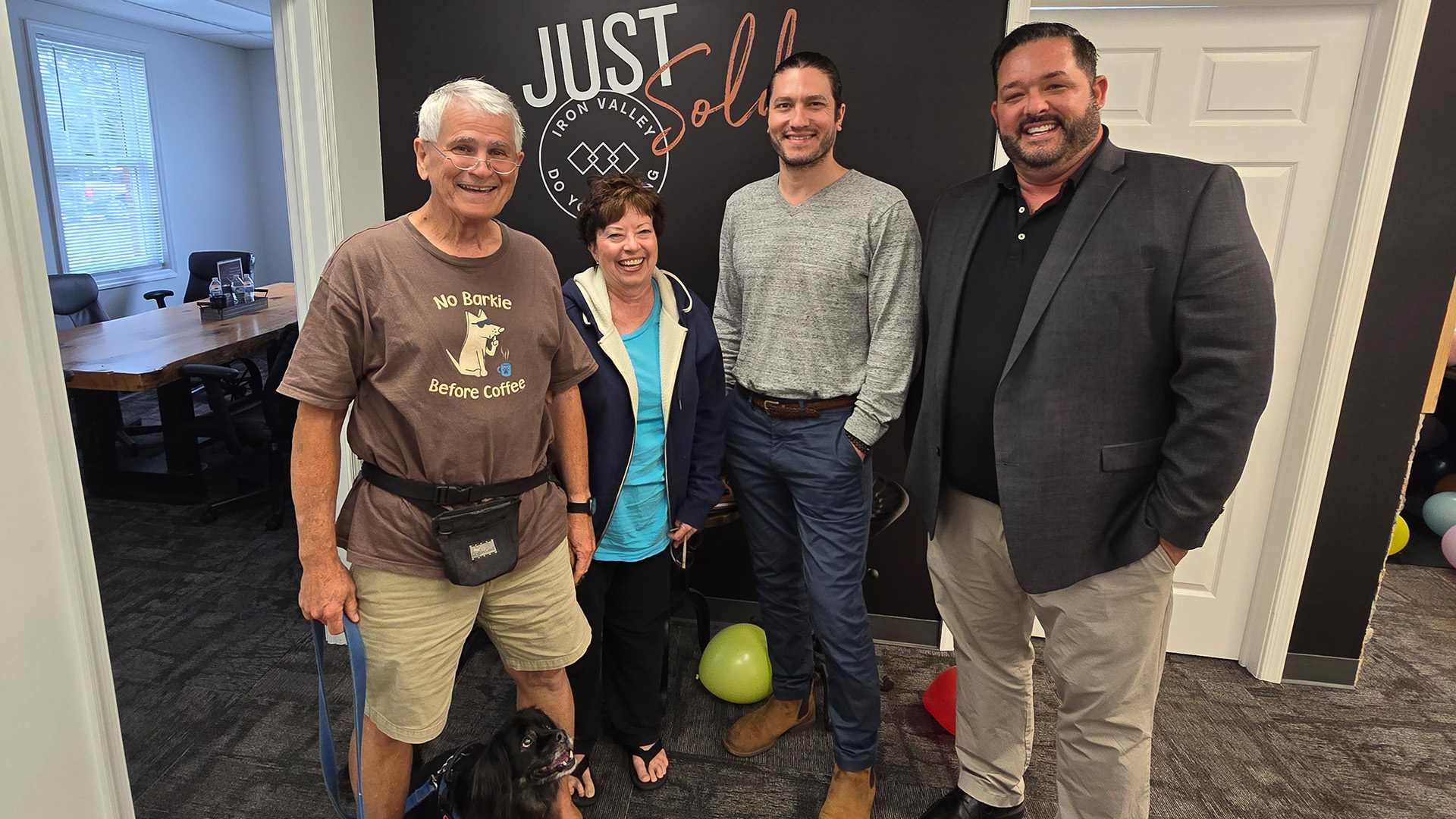
Big smiles, wagging tails, and keys in hand — another happy Central PA closing.
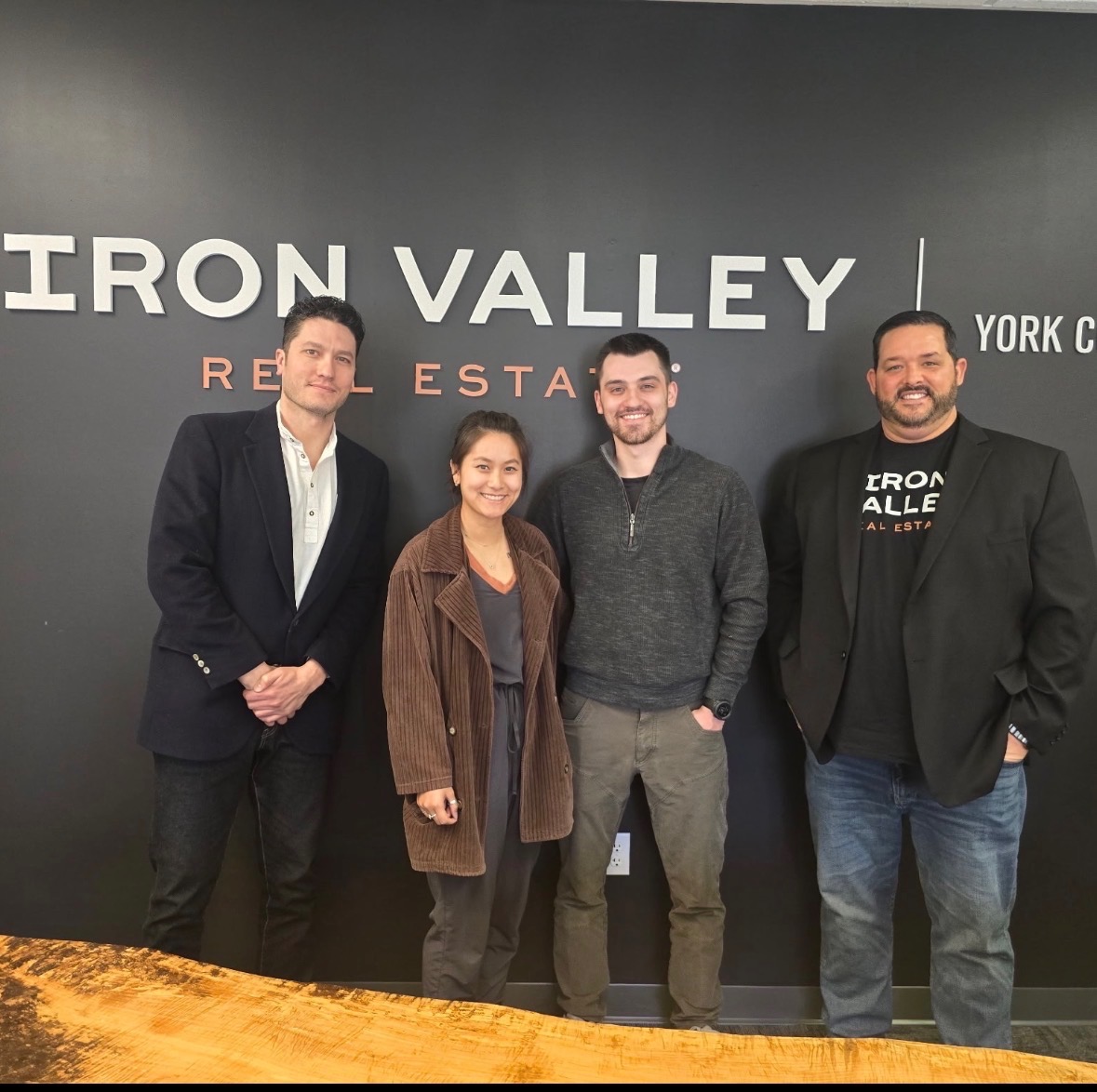
Aaron and Josh celebrate every settlement milestone alongside their clients at Iron Valley Real Estate.
You've defined the search, toured the homes, written the offer, navigated inspections and financing, and now you're at the closing table. Settlement day is the last step — and the start of the next chapter. Here's what actually happens at a Central PA closing in Harrisburg, Camp Hill, Mechanicsburg, Carlisle, or Hershey, what you'll sign and pay, and what we recommend you handle in the first 30 days after you get your keys.
Settlement day, step by step.
In Pennsylvania, real estate closings typically happen at a title company or with a settlement agent (sometimes an attorney), and both buyers and sellers (or their representatives) attend. You'll arrive with your photo ID and the wire instructions your lender sent (never wire based on an email — verify by phone with a number you already have, because wire fraud targeting real estate transactions is real). The settlement agent will walk you through the closing disclosure — the document that shows every dollar of the transaction — and you'll sign the stack: the promissory note, the mortgage (the security instrument), the deed, the various affidavities, and the lender's disclosures. You'll also sign the title documents and pay (or have already wired) your closing costs and down payment. When the documents are signed, the loan funds, the deed records, and you get the keys. The whole process usually takes 60–90 minutes.
Understand your closing costs before you sit down.
Closing costs in Pennsylvania typically run 2–5% of the purchase price for a buyer, and they include several categories: lender fees (origination, underwriting, discount points if any), prepaid items (your first year of homeowners insurance, property tax escrow, interim interest), title insurance (both the lender's policy, which your lender requires, and an optional owner's policy, which protects you), recording fees for the deed and mortgage, transfer taxes (in Pennsylvania, the state transfer tax is 1%, typically split between buyer and seller, and some municipalities add a local transfer tax), and the title company's settlement fee. We'll review your closing disclosure a few days before settlement so there are no surprises — the number on the disclosure should match the number we estimated when you wrote the offer.
Pennsylvania-specific transfer taxes.
Pennsylvania imposes a 1% state realty transfer tax on the sale price, and by local custom it's typically split 50/50 between buyer and seller — so a buyer pays about 0.5% of the purchase price. Many municipalities add their own local transfer tax on top: in the Harrisburg area, local transfer taxes vary by municipality and school district. On a $350,000 home, a 1% total split means roughly $1,750 from each side, and a 2% total (where local add-ons apply) means $3,500. These are paid at settlement from the funds you wire. We'll tell you the exact transfer tax for the municipality you're buying in before you write the offer, so it's in your budget.
Title insurance — what it is and why it matters.
Your lender requires a lender's title policy, which protects the lender's interest in the property. An owner's title policy (which we recommend) protects you — for as long as you own the home — against title defects that weren't caught in the title search: undisclosed liens, boundary disputes, errors in prior deeds, fraud, or missing heirs. In Pennsylvania, owner's title insurance is a one-time premium paid at settlement, and it's one of the best dollar-for-dollar protections in a real estate transaction. A claim could arise years after closing from an issue that predates your ownership; the owner's policy is what defends your ownership. We'll walk you through the title commitment before settlement so you understand exactly what's covered.
The final walkthrough — your last look before you own it.
A day or two before settlement, we walk through the home one final time. We're confirming: the home is in the condition agreed in the contract, the inspection-negotiated repairs were actually completed, the appliances and fixtures the seller agreed to leave are still there, the home wasn't damaged between contract and closing, and the seller has removed what they agreed to remove. If something's off — say, the seller took the chandelier they agreed to leave, or the repair wasn't done — we address it before we sign, because once the deed records, your leverage to fix it drops sharply. The final walkthrough is a 15-minute step that protects the agreement you spent weeks negotiating.
How to pay at the table.
Your down payment and closing costs are due at settlement, almost always by wire transfer sent a day or two before closing (never by personal check, which can delay funding). Wire fraud is a real and growing threat in real estate — criminals intercept emails and send fake wire instructions that look like they're from your title company or lender. The rule, always: call your title company or lender at a phone number you already had (not a number in an email) to verbally verify the wire instructions before you send a dollar. We remind every buyer of this, because the cost of getting it wrong is the entire down payment.
Scenario: the smooth closing.
A Camp Hill buyer, conventional financing, 20% down, well-prepared lender, clean inspection, no appraisal issues. The closing disclosure arrives three days before settlement, the numbers match the offer, the wire goes out the day before, the final walkthrough is clean, and settlement takes 45 minutes of signing. The loan funds the same day, the deed records, and the buyer walks out with the keys and a garage door opener. This is what a well-managed due-diligence phase delivers — and it's the majority of our closings.
Scenario: the delayed closing.
A Mechanicsburg buyer's lender requests one more document 48 hours before settlement — a verification of a large deposit in their bank account. The buyer is traveling and slow to respond. The clear-to-close is delayed, settlement pushes by three days, and the seller (who was planning to close on their own purchase the same week) has to negotiate a rent-back. The deal still closes — but the stress was avoidable. This is why we tell every buyer: between contract and closing, be reachable, be responsive, and don't move money. The most common closing delays come from buyers, not from the home.
Scenario: the appraisal gap.
A Hershey buyer agrees to $520,000 on a home that comps support at $505,000. The appraisal comes in at $510,000 — a $10,000 gap. The buyer has an appraisal contingency and three options: renegotiate the price to $510,000 (the seller may or may not agree), pay the $10,000 gap in cash at closing (bringing more money to the table), or walk. The buyer wants the home, has the cash, and chooses to bridge the gap. We document it, the lender adjusts, and the deal closes. An appraisal gap isn't a failure — it's a moment to make an informed financial decision, which is exactly what we help you do.
The first 30 days of ownership.
Once you have the keys, a few items in the first month protect your investment. Change the locks and rekey or update the garage door code — you don't know who has a copy of the old keys. Transfer or set up the utilities (electric, gas, water, sewer, trash, internet) so there's no gap in service. File for your homestead exemption if your municipality offers one (in Pennsylvania, the homestead/farmstead exemption can reduce your school district property taxes — the deadline to apply is typically March 1 of the year following purchase). Update your homeowners insurance to confirm the policy is active and the binder is on file with the lender. Locate and label the main water shutoff, the gas shutoff, and the electrical panel — the day you need them is not the day to find them. Schedule any inspection-negotiated repairs that were deferred, and start a home maintenance fund — owning a home in Central PA means a roof, a furnace, and a water heater will eventually need replacing, and budgeting $100–$200/month toward a maintenance reserve prevents the next surprise from becoming a crisis.
Set up your annual maintenance rhythm.
A Central PA home runs on a seasonal rhythm: in the spring, service the AC before the first hot week, clean the gutters, and inspect the roof after winter; in the fall, service the furnace before heating season, disconnect and drain outdoor hoses, and service or winterize any irrigation; in the winter, watch for ice damming on older roofs and keep the walkways clear; year-round, change the HVAC filters and test the smoke and carbon monoxide detectors. We give every buyer a maintenance checklist at settlement — because the best time to prevent a $9,000 furnace replacement in January is to service it in October.
We're still here after the keys.
The transaction closes; the relationship doesn't. We're here for the first-year questions — the contractor referral, the property tax assessment review, the 'is this normal?' photo of a basement crack, and the conversation about where the market is heading when you're ready to move again. Many of our buyers become sellers, and many of our sellers become buyers, and the reason is simple: we treat the closing as the start of a relationship, not the end of a transaction. When you're ready to close on a Central PA home — and to own it well — Aaron Rissinger and Josh Krevsky are here. Living in Central PA Team | Iron Valley Real Estate of Central PA — 717-REALTOR (717-732-5867) — your Central PA real estate agents for closings and settlement across Harrisburg, Camp Hill, Mechanicsburg, Carlisle, Hershey, Lancaster, and the entire 717 area.
Key Takeaways
- Settlement in PA happens at a title company; plan 60–90 minutes and bring photo ID
- Closing costs run 2–5% of the price — lender fees, prepaid items, title, recording, and transfer taxes
- PA's 1% state transfer tax is typically split 50/50; local add-ons vary by municipality
- Owner's title insurance is a one-time premium that protects your ownership for as long as you own it
- Do a final walkthrough a day or two before settlement to confirm condition and repairs
- Wire fraud is real — always verify wire instructions by phone at a number you already have
- First 30 days: rekey, transfer utilities, file homestead, find the shutoffs, start a maintenance fund
- We're still here after the keys — the closing is the start of the relationship
- Work with a Central PA real estate agent who attends settlement with you
- Close on homes in Harrisburg, Camp Hill, Mechanicsburg, Carlisle & Hershey with confidence