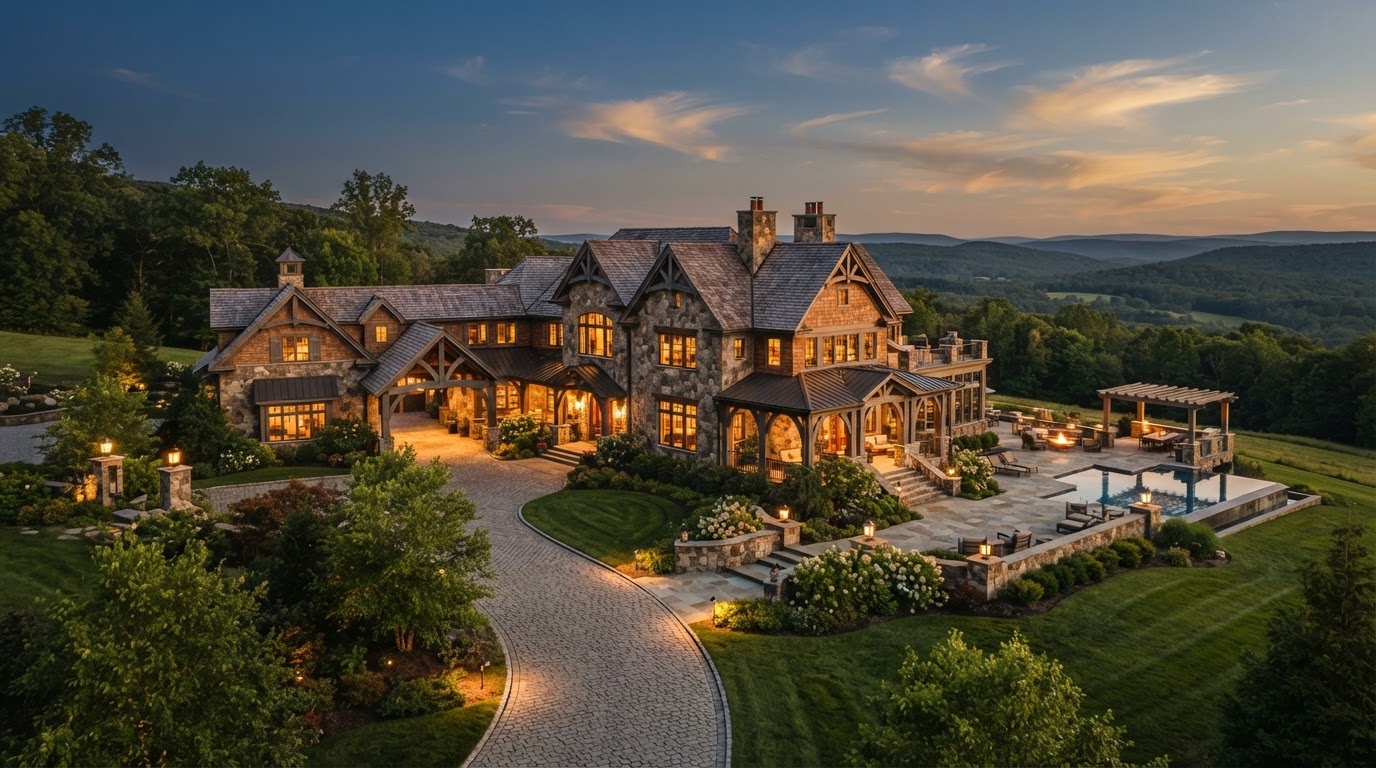

Walking the streets and reading the neighborhood — the hyper-local knowledge that grounds every pricing decision.
An address is not a neighborhood, and a neighborhood is not a price. Across Central Pennsylvania, school district boundaries zigzag along municipal lines that don't follow ZIP codes, property tax rates vary by municipality, and a street two blocks apart can carry a meaningfully different value. Here's how hyper-local knowledge — the kind that only comes from working these streets every day — protects your pricing accuracy and your equity.
Why hyper-local knowledge beats county-level data.
County-level medians are useful for understanding broad trends, but they're useless for pricing a specific home. A Cumberland County median of $277,600 tells you nothing about the difference between a home in the Camp Hill school district and one in East Pennsboro, even though both carry a Mechanicsburg or Camp Hill mailing address. The factors that actually determine your home's value — the specific school district, the specific neighborhood's desirability, the lot characteristics, the municipal tax rate — are hyper-local. An agent who prices off county data will get it wrong; an agent who knows the neighborhood will get it right.
The school district boundary trap.
This is the single most common pricing error we see from agents and buyers unfamiliar with Central PA. A Mechanicsburg mailing address does not guarantee Mechanicsburg Area School District — it can fall within Cumberland Valley, Mechanicsburg Area, or another district depending on the exact street. A Harrisburg mailing address can fall within Central Dauphin, Susquehanna Township, or Harrisburg School District. A Lemoyne mailing address can be West Shore or Camp Hill district. School district boundaries zigzag along municipal lines that don't follow ZIP codes or post office names. Because the school district is the single biggest driver of resale value in most of our communities — families pay premiums to land in Cumberland Valley, Camp Hill, Mechanicsburg Area, and Derry Township (Hershey) — getting the district wrong at the pricing stage means leaving money on the table or overpricing and sitting.
How school districts shift value.
The data is clear: higher-performing school districts correlate with stronger, more stable home values. According to the 2020–2024 American Community Survey, Cumberland County's median owner-occupied home value is approximately $277,600 — roughly 17.4% higher than Dauphin County's $236,400 — and much of that gap is attributable to the premium buyers place on the West Shore's top districts. GreatSchools and Niche ratings tend to place Cumberland Valley, Camp Hill, Mechanicsburg Area, Derry Township (Hershey), and Central Dauphin in the 7–9 out of 10 range. A home in the Cumberland Valley district will typically command a higher price per square foot than an identical home a few streets away in a different district. When we price your home, we verify the exact district by street address and use comps from within that district, not from a neighboring one.
Neighborhood desirability and micro-markets.
Within a single school district, neighborhoods have their own micro-markets. In Camp Hill, the borough's tree-lined streets, walkability, and community identity command a premium over surrounding townships with the same mailing address. In Mechanicsburg, the difference between a borough street and a township cul-de-sac is the difference between two lifestyles and two price points. In Hershey, proximity to the medical center and the Derry Township schools drives a premium that a comparable home outside the township doesn't share. We track these micro-markets — the specific streets, subdivisions, and neighborhoods where values run higher or lower than the district average — so your price reflects your home's actual location, not a generic district number.
Lot characteristics and what they're worth.
Two identical homes on different lots can vary significantly in value. A private, wooded lot, a flat usable yard, a corner lot, a cul-de-sac location, a water view, or a large acreage all add value. A busy road, a backing-to-commercial location, an odd-shaped lot, a steep slope, or a flood-prone area subtract it. In Central PA, where many of our desirable neighborhoods have mature trees and established landscaping, the lot is often what makes one home feel special and another feel ordinary. We walk your lot, assess its characteristics, and adjust the comp baseline accordingly — because a buyer absolutely will.
Property taxes by municipality.
Pennsylvania property taxes are determined by the county, municipality, and school district, and because rates and assessment practices vary, two similarly priced homes in neighboring municipalities can carry noticeably different annual tax bills. As a rough guide for a $350,000 home: Camp Hill Borough may see $6,000–$7,500 annually; Hampden Township $4,500–$5,800; Lower Paxton Township $5,000–$6,500; Derry Township (Hershey) $5,500–$7,000; and Harrisburg city $6,500–$8,500. Camp Hill Borough's total millage tends to run higher than surrounding townships because of its small commercial tax base, while Hampden and Silver Spring townships often have lower effective rates due to their larger commercial and industrial bases. These tax differences affect what a buyer can afford monthly, which affects what they'll offer — so we factor the specific municipal tax bill into the pricing analysis, not just the list price.
Municipal services and zoning.
Beyond taxes, municipalities differ in the services and rules that affect a home's value and a buyer's decision. Some boroughs offer trash and recycling collection; some townships require private haulers. Zoning ordinances affect what a buyer can do with the property — can they build a fence, add a deck, run a home business, keep chickens, or subdivide the lot? HOA rules, where applicable, add another layer. A buyer evaluating two similar homes will weigh these differences, and so do we when pricing. A home in a municipality with restrictive zoning or high fees may price slightly lower than an identical home in a more flexible one.
Proximity to amenities and infrastructure.
Hyper-local pricing also accounts for proximity to the amenities and infrastructure that shape daily life. Walkability to downtown Camp Hill or Mechanicsburg, proximity to the Capital Area Greenbelt or Riverfront Park, access to the Carlisle Pike shopping corridor, distance to the Penn State Health Milton S. Hershey Medical Center, and convenience to I-81, I-83, and the Pennsylvania Turnpike all influence value. A home within walking distance of a vibrant downtown commands a premium; a home backing to a highway sells at a discount. We map these proximity factors for your specific property and adjust the comp baseline to reflect them.
Flood zones and environmental factors.
A portion of Central PA — particularly properties near the Susquehanna River, the Conodoguinet Creek, the Yellow Breeches Creek, and other waterways — falls within FEMA-designated flood zones. A home in a flood zone carries mandatory flood insurance requirements that add to the monthly ownership cost, which reduces what a buyer can afford and can depress the sale price. We check the flood zone status for every property we price and disclose it transparently, because a buyer's lender will require it and a surprise at the contract stage can kill a deal. Environmental factors like soil conditions (clay soil and foundation movement), steep slopes, and proximity to industrial sites also factor into a hyper-local pricing analysis.
The value of having walked the streets.
All of this hyper-local knowledge — the district boundaries, the micro-markets, the lot characteristics, the tax differences, the zoning, the proximity, the flood zones — comes from one source: having walked the streets. Aaron grew up in Duncannon in Perry County, spent his teenage years building homes alongside his grandfather, and has worked these neighborhoods for decades. Josh was born and raised in Harrisburg and has performed, taught, and worked throughout the region. Through the Living in Central PA YouTube channel, we've filmed community tours across the 717 — so we know the streets before we show them. That on-the-ground knowledge is what separates a price grounded in reality from one pulled from a database. Ready for a pricing analysis built on hyper-local knowledge of your neighborhood? Aaron Rissinger and Josh Krevsky — Living in Central PA Team | Iron Valley Real Estate of Central PA — 717-REALTOR (717-732-5867).
Key Takeaways
- County-level medians are useless for pricing a specific home — hyper-local data is what matters
- A mailing address does not guarantee a school district — verify by street address
- School district is the single biggest driver of resale value in most Central PA communities
- Cumberland Co. median home value ~$277,600; Dauphin ~$236,400 (2020–2024 ACS)
- Within a district, neighborhoods have their own micro-markets and price points
- Lot characteristics (privacy, slope, road frontage) can shift value by tens of thousands
- Property taxes vary by municipality — $4,500–$8,500 for a $350K home depending on location
- Flood zone status, zoning, and proximity to amenities all factor into the price
- Hyper-local knowledge comes from having walked the streets — not from a database