
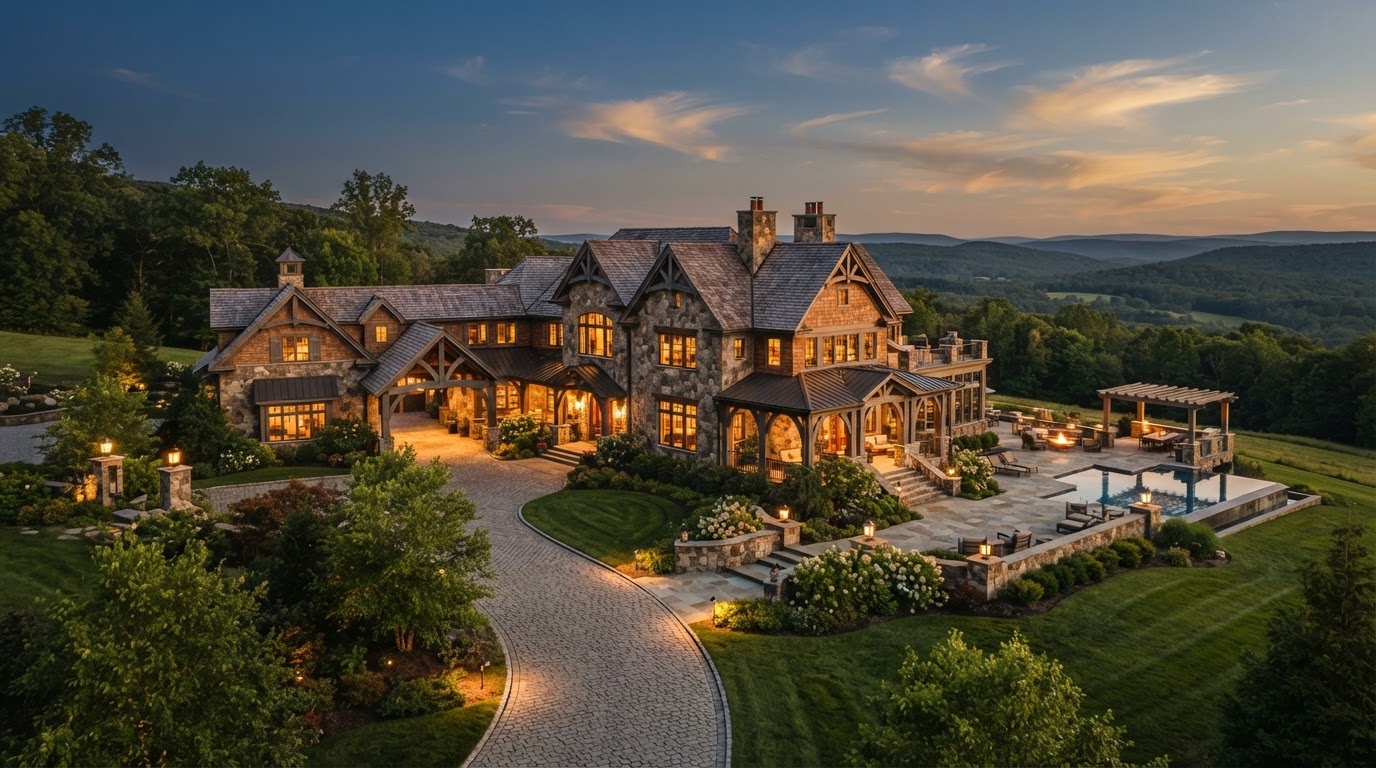

Strategic pricing and presentation working together to position a Central PA listing for maximum buyer interest.
Two homes with the same supported value can sell for very different prices depending on how they're positioned. List-price strategy — where you set the number relative to search brackets, psychological thresholds, and the active competition — determines how many buyers ever see your home and how strong the resulting offers are. Here's how we use strategic positioning to draw buyers in and protect your equity.
Pricing is a strategy, not just a number.
Once the comparable market analysis gives us a supported value range, the next decision is strategic: where within or around that range do we set the list price to achieve your goal? The same $325,000–$340,000 supported range can be listed at $329,900, $339,900, or $349,900 — and each choice sends a different signal, reaches a different pool of buyers, and produces a different outcome. The right choice depends on your goals (speed versus top dollar), the current competition, and the psychology of the buyers active in your price band.
Search brackets and how buyers shop.
Most buyers shop within price brackets — they set a maximum on a search portal like Zillow, Realtor.com, or the Bright MLS and rarely look above it. A buyer pre-approved to $350,000 sets their search ceiling at $350,000 and never sees a home listed at $351,000. This means a list price just above a common bracket threshold can cut you off from a large pool of qualified buyers. We map the common bracket thresholds in your market — $300,000, $325,000, $350,000, $375,000, $400,000, $450,000, $500,000 — and position your price to land just inside the bracket that captures the most qualified buyers for your home's value.
Psychological pricing thresholds.
Buyers respond to price endings in predictable ways. A price of $329,900 reads as 'in the $320s' and feels meaningfully different from $331,000, even though the difference is $1,100. The $329,900 price also captures buyers searching up to $330,000 and $335,000, while $331,000 may not. We use these thresholds deliberately: pricing just below a round number ($399,900 instead of $400,000) can capture an entire additional bracket of buyers. This isn't a trick — it's an acknowledgment of how search portals and buyer psychology actually work. The goal is maximum qualified exposure, which produces the strongest competitive energy.
Positioning relative to the active competition.
Your list price doesn't exist in isolation — it exists relative to the other homes a buyer is comparing it to. If three comparable homes in your neighborhood are listed at $345,000, $349,000, and $359,000, and your supported value is $340,000, listing at $339,900 positions you as the clear value of the group — the home that looks like the best deal relative to its competition. That positioning drives showings and, often, multiple offers. Conversely, listing at $359,000 against the same competition positions you as the most expensive option with no clear advantage, which typically means fewer showings and a longer market time. We always map the active competition before setting the price.
The strategy of pricing slightly below value to create competition.
In a strong seller's market — when inventory is tight and buyer demand is high — we sometimes recommend pricing slightly below the supported value to generate maximum showings and multiple offers. The logic: a home listed at $329,900 with a supported value of $340,000 will draw more buyers than the same home listed at $339,900. More buyers means more competition, and competition drives the final price up — often above what a higher list price would have achieved. This strategy works when the market data supports it (low inventory, high absorption rate, rising prices) and when the home shows well. It is not a gamble; it's a calculated move grounded in the trend data.
When to price at or above the supported value.
Not every home benefits from pricing below value. If the market is balanced or softening, if the home is unusual and appeals to a narrow buyer pool, or if the seller has time and wants to test the ceiling, pricing at or slightly above the supported value can be the right call. A unique property — exceptional acreage, unusual privacy, a premium feature competing homes lack — may justify a higher asking price, because the right buyer will value what makes it special. But we always pair a higher price with a clear-eyed expectation: fewer showings, a longer market time, and a willingness to adjust if the market doesn't respond. Pricing above value without a plan to adjust is how homes sit and sell for less.
The first two weeks are everything.
A listing gets its most attention — and its strongest buyers — in the first two to three weeks on market. Showings peak, portal views peak, and the buyers who've been waiting for the right home act. This is why the initial list price is so critical: if you price too high and miss this window, the buyers move on to fresher listings, showings drop, days on market climbs, and the home begins to carry a 'something's wrong' stigma. By the time you reduce the price, the most motivated buyers are gone. Pricing right from day one captures the window when your home is freshest and demand is highest.
Price reductions and their hidden cost.
A price reduction is not a neutral event — it carries a cost beyond the lower number. Buyers and their agents track days on market and price history. A reduced listing signals that the home was overpriced and that the market rejected it, which invites lower offers and weakens your negotiating position. Data consistently shows that homes that require price reductions sell for less, on average, than homes priced correctly from the start — even when the final reduced price is similar to what a correct initial price would have been. The reduction itself changes buyer perception. This is why we invest so heavily in getting the initial price right: it's cheaper than a reduction.
How we present the price to the market.
Strategic positioning extends beyond the number to how the listing is presented: the professional photography, the cinematic video, the drone footage, the MLS description, and the syndication across every major portal. A well-positioned price paired with weak presentation underperforms; a well-positioned price paired with strong presentation overperforms. When we launch your listing, the price and the presentation work together — the price draws buyers in, and the presentation makes them want to schedule a showing. Get either wrong and the strategy falters.
Scenario: the overpriced listing.
A seller insists on listing a $340,000-supported-value home at $369,000 because they 'want room to negotiate.' The home gets few showings in the first two weeks, sits for 45 days, and is reduced to $349,900. It eventually sells for $335,000 — below the supported value — because the market time and reduction signaled weakness. Had it been listed at $339,900 from day one, it likely would have drawn multiple offers and sold at or above $340,000 within two weeks. The 'room to negotiate' strategy cost the seller roughly $5,000–$15,000 and six weeks of carrying costs. This is the most common — and most expensive — pricing mistake we see.
Scenario: the strategically underpriced listing.
In a tight Camp Hill market with low inventory, we list a $340,000-supported-value home at $329,900. The home draws 12 showings in the first weekend and receives three offers, two above asking. It sells for $347,000 — above the supported value — because the strategic pricing created the competitive energy that drove the price up. The seller netted more than they would have at a higher list price, and sold in days rather than weeks. This strategy isn't right for every home or every market, but when the data supports it, it's one of the most effective tools we have. Ready to position your home strategically? Aaron Rissinger and Josh Krevsky — Living in Central PA Team | Iron Valley Real Estate of Central PA — 717-REALTOR (717-732-5867).
Key Takeaways
- Pricing is a strategy — the same supported value can be listed multiple ways
- Buyers shop in price brackets; pricing just above a threshold cuts off qualified buyers
- Psychological thresholds ($329,900 vs $331,000) capture additional search brackets
- Always map the active competition before setting the list price
- Pricing slightly below value can create multiple-offer competition in a strong market
- The first 2–3 weeks on market are when a listing gets its strongest attention
- Price reductions carry a hidden cost — reduced listings sell for less on average
- Price and presentation must work together to draw buyers and drive showings