
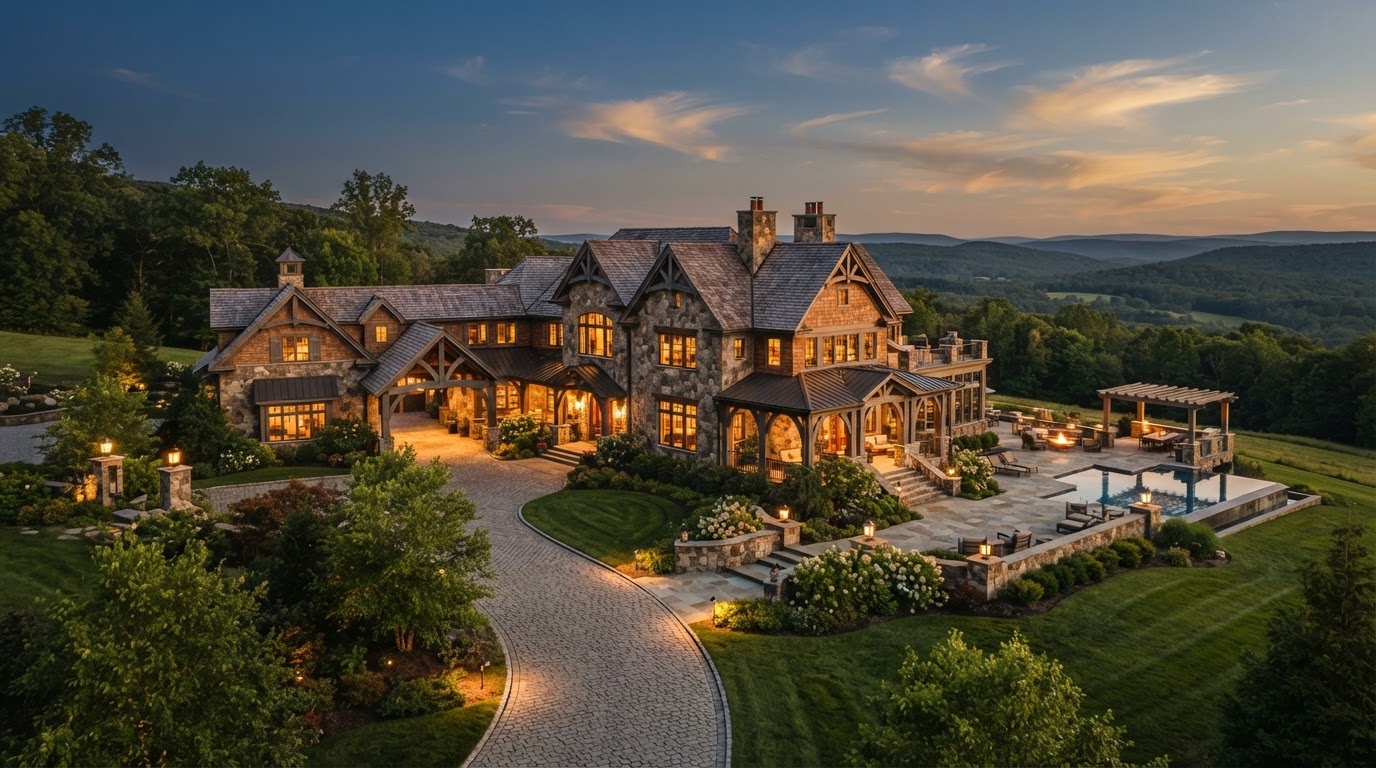
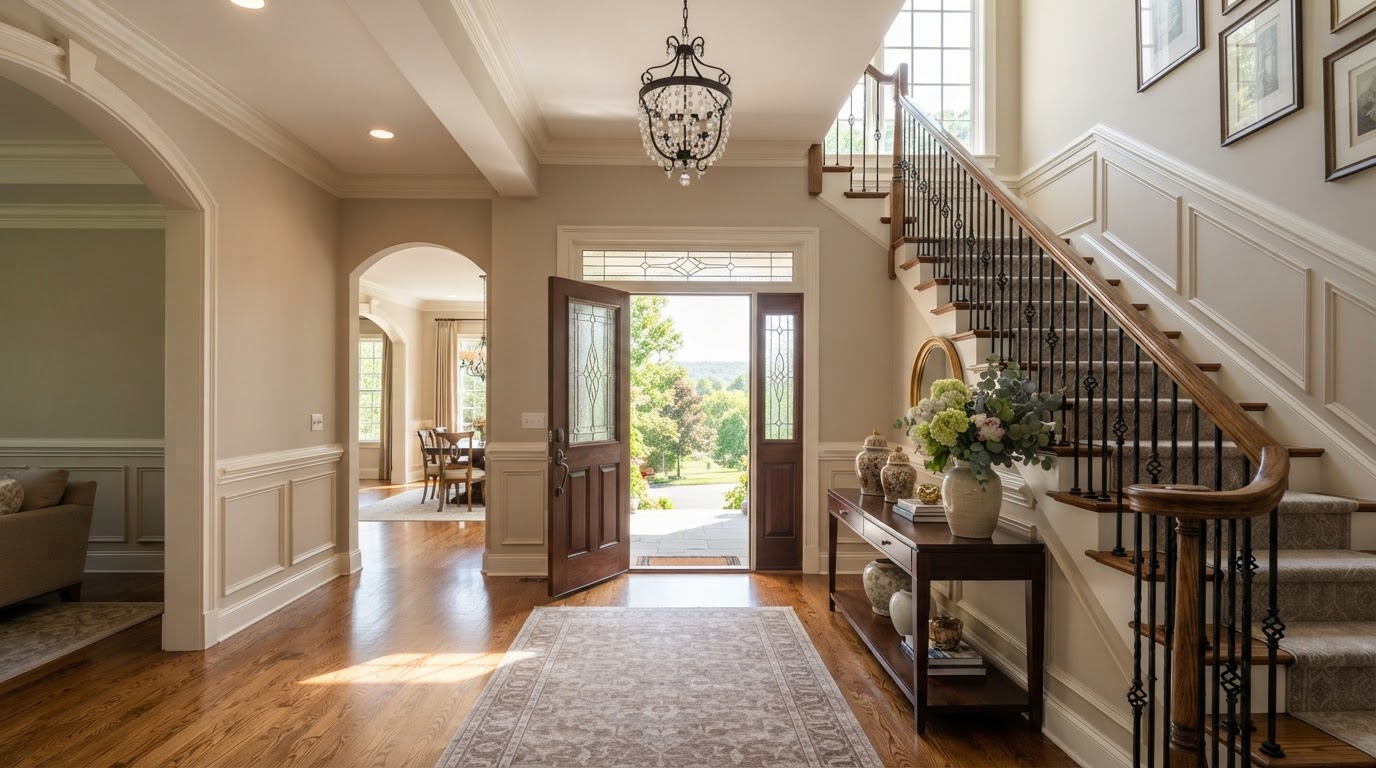
The first showing starts at the front door. Open it, step inside, and tour the home room by room — the way a buyer experiences your listing the moment they arrive.
A listing gets its most attention — and its strongest buyers — in the first two to three weeks on market. That window is when showings peak, portal views peak, and the buyers who've been waiting for the right home act. Whether your home is in Harrisburg, Camp Hill, Mechanicsburg, Carlisle, Hershey, or Lancaster, here's how we launch your listing to capture that window, and how we manage showings so your home shows its best every time.
The launch is a coordinated event, not a switch.
A strong launch isn't just flipping the MLS to 'active' — it's a coordinated event that puts your home in front of the maximum number of qualified buyers at the same moment. We align the professional photography, video, drone footage, MLS description, syndication, social campaigns, and email blast so they all go live together. A piecemeal launch — photos one day, video three days later, social next week — wastes the freshness that makes the first week so powerful. We launch as one event so your home debuts to maximum exposure.
Timing the launch for the first weekend.
Most buyers shop on weekends, so we time the launch to build momentum into the first weekend of showings. A mid-week launch gives buyers time to see the listing, schedule a showing, and tour by Saturday. We may recommend an open house that first weekend to capture the surge of interest. The goal is to have multiple qualified buyers touring in the same window, because concurrent showings create the competitive energy that drives strong offers.
The first-weekend open house.
For many listings, a first-weekend open house is the single highest-traffic event of the entire sale. It brings in neighbors (who often know someone looking to move to the area), relocating buyers who've planned a scouting trip, and the buyers who've been watching the market. We staff the open house, gather feedback, and identify the serious buyers. Even if the open house doesn't produce an immediate offer, it generates the showing activity and word-of-mouth that fuel the first two weeks.
Managing showings with minimal disruption.
A well-priced home in a desirable Central PA neighborhood can draw multiple showings in the first week. We coordinate every showing through a scheduling system that confirms availability, gives you notice, and tracks the agent and buyer. We discuss your showing preferences up front: how much notice you need, whether you want to leave during showings (we recommend it — buyers are more comfortable and spend more time when the seller isn't present), and how to handle pets. We build a showing protocol that keeps your life livable while maximizing buyer access.
Preparing the home for each showing.
Before every showing, we remind you of the quick prep that makes the home show its best: open all blinds and turn on all lights, make the beds, clear countertops, put away personal items, take out the trash, and — if possible — leave the home. We provide a pre-showing checklist so it becomes a quick routine rather than a scramble. A home that shows bright, clean, and uncluttered every time consistently gets stronger feedback and stronger offers.
Gathering and interpreting showing feedback.
After each showing, we follow up with the buyer's agent for feedback — what the buyer thought of the price, condition, and features, and whether they're considering an offer. We compile this feedback and share it with you, because patterns in feedback are diagnostic. If five buyers love the home but say it's priced $10,000 high, that's a pricing signal. If buyers consistently mention a specific feature (a small bedroom, a busy street), that's a positioning or pricing consideration. Feedback is one of the most valuable tools in the first two weeks, and we track it carefully.
The showing-to-offer conversion.
Not every showing produces an offer, and that's normal — buyers tour multiple homes. But a well-priced, well-presented home converts a healthy percentage of showings into offers. We track the showing-to-offer ratio and, if showings are strong but offers aren't materializing, we diagnose why: is it price, condition, or competition? Often a small adjustment — a price refinement, a staging tweak, or a refreshed marketing push — converts strong interest into offers. We don't just wait for offers; we actively manage the conversion.
What to do if showings are slow.
If a well-priced home isn't drawing showings in the first two weeks, something is off — and it's almost always price or presentation. We diagnose quickly: are the photos representing the home well? Is the price in the right search bracket? Is there new competition that's drawing buyers away? Is the market shifting? We respond with a targeted adjustment rather than letting the home sit, because every week on market without showings weakens the listing's position. Speed of response in the first month is what separates a sale from a stale listing.
Scenario: the strong launch.
A well-priced, well-prepped Camp Hill colonial launches on a Wednesday with professional photos, video, and drone. By Thursday, the syndication is live across every portal and the social campaign is running. The first-weekend open house draws 25 visitors and three showings are scheduled for the following week. By day 10, two offers are in. The coordinated launch captured the first-two-weeks window at full strength, and the competitive energy produced a strong sale. This is what a well-managed launch looks like.
Scenario: the slow start.
A home launches at a price slightly above the supported value 'to leave room.' Showings are sparse in the first two weeks, and feedback consistently cites price. Rather than waiting, we recommend a prompt, strategic price adjustment to the supported value, refresh the marketing, and the home draws 6 showings in the next week and an offer. The key was responding quickly to the market's signal rather than letting the home accumulate market time. A fast, data-driven adjustment recovers most of the lost momentum; a slow, stubborn response does not.
The launch sets the tone for the entire sale.
A strong launch creates momentum, competition, and the conditions for a strong offer in the first weeks. A weak launch — whether from poor pricing, poor prep, or poor marketing — means playing catch-up for the rest of the listing. That's why we invest so heavily in getting the launch right: it's the highest-leverage moment in the entire sale. Ready to launch your home the right way? Aaron Rissinger and Josh Krevsky — Living in Central PA Team | Iron Valley Real Estate of Central PA — 717-REALTOR (717-732-5867) — your Central PA real estate agents for home-selling launches and showings across Harrisburg, Camp Hill, Mechanicsburg, Carlisle, Hershey, Lancaster, and the 717 area.
Key Takeaways
- The first 2–3 weeks are when a listing gets its strongest attention — capture them
- A strong launch is a coordinated event, not a switch flipped to 'active'
- Time the launch to build momentum into the first weekend of showings
- A first-weekend open house is often the highest-traffic event of the sale
- Leave during showings — buyers are more comfortable and spend more time
- A pre-showing checklist makes showing prep a quick routine
- Showing feedback is diagnostic — patterns reveal price or condition issues
- If showings are slow, respond fast with a targeted adjustment, not stubbornness
- Work with a Central PA real estate agent who manages your listing launch
- Launch your home for sale in Harrisburg, Camp Hill, Mechanicsburg, Carlisle & Hershey