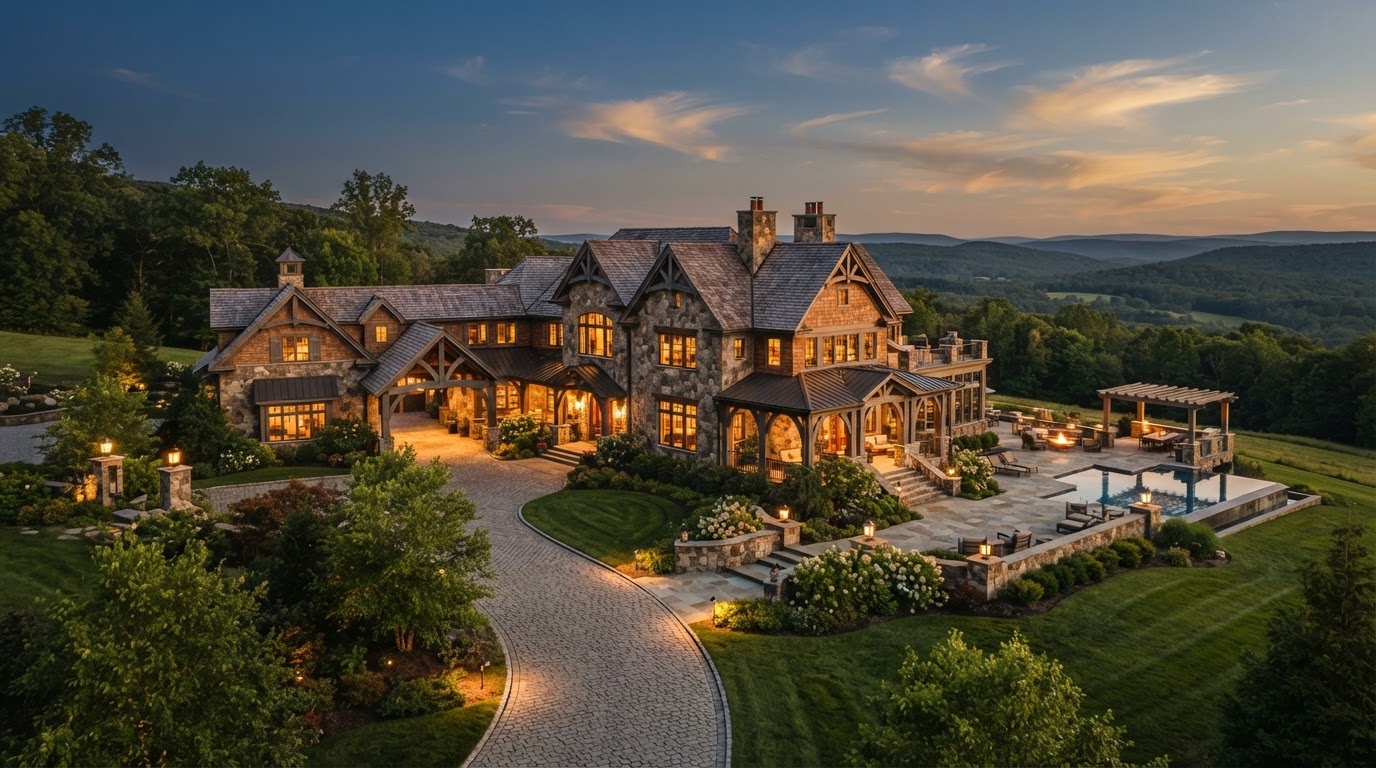

The Harrisburg skyline reflected in the Susquehanna River — the river that splits the region into the West Shore and East Shore.
Ask anyone in the 717 which side of the river they live on and you'll get an answer loaded with opinion. The Susquehanna doesn't just split Harrisburg geographically — it splits two distinct lifestyles, school districts, tax structures, and commutes. Here's how we help buyers decide, with the latest 2026 statistics on pricing, inventory, demographics, and cost of living.
The West Shore (Cumberland and Perry counties) is known for top-rated school districts like Cumberland Valley and Camp Hill, walkable riverfront boroughs, and a slightly more suburban, family-oriented feel. Inventory runs tighter and price points skew higher, but the trade-off is consistent resale value and strong community identity. According to the 2020–2024 American Community Survey, Cumberland County's median owner-occupied home value is approximately $277,600 — roughly 17.4% higher than Dauphin County's $236,400 — and its owner-occupied housing rate of 71.3% is among the highest in the region, reflecting a deeply rooted homeowner population.
The East Shore (Dauphin County) gives you the state capital, Harrisburg's urban riverfront energy, City Island, the Midtown arts district, and easy access to Hershey and the medical center. You'll find a wider range of price points, from downtown condos to established East Shore suburbs like Lower Paxton and Linglestown served by Central Dauphin schools. Dauphin County's owner-occupied housing rate is 63.1%, lower than Cumberland's, in part because of the larger renter population concentrated in Harrisburg city — which also means buyers willing to look past the urban core can find relative value in the surrounding suburbs.
Population and growth tell a clear story.
The U.S. Census Bureau estimates Cumberland County's population at roughly 277,270 as of 2025, up 6.9% (about 17,800 residents) since the 2020 Census — growth concentrated in Mechanicsburg, Hampden Township, Upper Allen Township, and Silver Spring Township, where residential and commercial development continue to reshape the landscape. Dauphin County's population is larger overall (roughly 288,000–290,000) but growing more slowly, which means the West Shore is absorbing a disproportionate share of the region's new households. That growth pressure is a key reason West Shore inventory stays tight and prices skew higher.
Home prices: where the numbers stand in 2026.
Based on recent data compiled from Realtor.com, Redfin, and Zillow, the West Shore's premium communities command clear price premiums. Camp Hill's median sold price sits around $310,000–$340,000 with roughly 25–35 days on market and a sale-to-list ratio near 99%. Mechanicsburg's broader market median sold price ranges from $367,000–$406,000 depending on the data source, with inventory down roughly 7% year over year. Enola and East Pennsboro Township typically run slightly below the Mechanicsburg median, often in the $250,000–$290,000 range, while New Cumberland and Lemoyne remain among the more affordable West Shore boroughs, with median sold prices commonly between $230,000 and $270,000. On the East Shore, Harrisburg city's median sold price is considerably lower — often between $160,000 and $190,000 — reflecting its urban rowhome housing stock. Lower Paxton Township and Colonial Park generally command medians in the $280,000–$340,000 range, Hummelstown sits around $290,000–$330,000, and Hershey remains the region's premium market with median sold prices frequently exceeding $450,000–$500,000, driven by the Derry Township school district and proximity to the medical center.
Commute is often the deciding factor.
If you work downtown or at the Capitol, the East Shore puts you minutes from the office. If you're commuting to the Turnpike corridor or value a quieter evening, the West Shore's bridge access keeps downtown within 10–25 minutes without living in the middle of it. According to the Census Bureau's 2020–2024 estimates, Cumberland County's mean commute to work is 21.8 minutes and Dauphin County's is 21.5 minutes — remarkably similar despite the different geographic layouts. But averages don't tell the whole story: someone working in downtown Harrisburg and living in Lemoyne may have a short commute, while someone living farther west in Mechanicsburg could spend substantially more time traveling during peak hours. The major river crossings — the Interstate 81 bridge, Interstate 83 bridge, Market Street Bridge, and M. Harvey Taylor Bridge — all carry heavy rush-hour traffic, and PennDOT has identified future rehabilitation work for the Market Street Bridge with construction anticipated as early as 2027. Our recommendation: drive your intended commute during the actual hours you would normally travel before deciding on a neighborhood.
Taxes vary meaningfully between the two — and even between districts on the same side.
We always run a side-by-side comparison of property taxes, earned income tax, and school district quality before recommending a side, because the 'cheaper' home can cost more over five years once taxes are factored in. Pennsylvania property taxes are determined by the county, municipality, and school district, and because rates and assessment practices vary, two similarly priced homes in neighboring municipalities can carry noticeably different annual tax bills. As a rough guide for a $350,000 home: Camp Hill Borough may see $6,000–$7,500 annually; Hampden Township $4,500–$5,800; Lower Paxton Township $5,000–$6,500; Derry Township (Hershey) $5,500–$7,000; and Harrisburg city $6,500–$8,500. These are illustrative ranges — always verify the specific property's most recent tax bill before making an offer, and factor the monthly tax cost into your affordability calculation, not just the mortgage payment.
Schools are the single biggest value driver on both shores.
The West Shore's top districts — Cumberland Valley, Camp Hill, and Mechanicsburg Area — consistently post above-average PSSA proficiency scores and draw relocating families willing to pay a premium to land in them. The East Shore counters with Derry Township (Hershey) and Central Dauphin, both of which rank among the region's best. According to the 2020–2024 ACS, roughly 40–43% of Cumberland County residents age 25 and older hold a bachelor's degree or higher, compared with approximately 36–39% in Dauphin County — both above the Pennsylvania state average of roughly 34%. For families relocating with school-age children, the school district often drives the neighborhood decision more than the side of the river, and higher-performing districts tend to correlate with stronger, more stable home values. One important caveat: a mailing address doesn't guarantee a school assignment. A Mechanicsburg mailing address can fall within Cumberland Valley or another district, and a Harrisburg mailing address can land in Central Dauphin or Susquehanna Township — always verify the assigned district by street address before purchasing.
Demographics and household composition differ in telling ways.
Cumberland County's median age is approximately 41.6 years, slightly older than Dauphin County's 39.4, reflecting Cumberland's higher share of retirees and established homeowners. Cumberland County's poverty rate is approximately 7–8% — among the lowest in Pennsylvania — while Dauphin County's is approximately 12–13%, influenced by the urban core of Harrisburg. Median household income in Cumberland County is approximately $87,494, while Dauphin County's is approximately $72,000–$76,000 depending on the reporting period, though the surrounding East Shore suburbs post incomes comparable to or exceeding many West Shore communities. Cumberland County has a higher share of married-couple family households (roughly 55–58%), while Dauphin County has a higher share of single-person and non-family households (roughly 35–38%), again reflecting the urban-versus-suburban character of each county. The Census Bureau's QuickFacts data also indicates Dauphin County has a more racially and ethnically diverse population overall — the Hispanic or Latino share is approximately 12.7% in Dauphin compared with 6.1% in Cumberland.
Employment and the local economy.
Central Pennsylvania benefits from a diversified employment base that helps insulate the housing market from single-industry downturns. The Census Bureau reported for 2023 that Cumberland County had 6,534 employer establishments, 131,167 total employment, and $7.40 billion in annual employer payroll, while Dauphin County had 6,951 employer establishments, 157,994 total employment, and $10.36 billion in annual employer payroll. Dauphin's larger payroll is driven largely by state government in Harrisburg and the Penn State Health Milton S. Hershey Medical Center. The West Shore counters with major employers in Mechanicsburg, Camp Hill, and Carlisle — including Penn State Health Holy Spirit Medical Center, corporate offices, distribution centers, and logistics businesses connected to the region's transportation corridors. The unemployment rate in both counties has historically tracked below or near the national average, hovering around 3.5–4.5% in recent reporting periods. For relocators, the practical implication is that both shores offer employment resilience — but the type of work you do may make one side meaningfully more convenient.
Cost of living and affordability.
The Harrisburg-Carlisle metro area consistently ranks as more affordable than major East Coast metros. According to C2ER and BestPlaces cost-of-living indices, the region's overall cost of living runs roughly 8–12% below the U.S. national average, with housing costs often 15–25% below the national average — compared with Philadelphia at roughly 10–15% above and the Washington, D.C. metro at 40–50% above. Within the region, utility, grocery, and transportation costs are broadly similar on both shores; the meaningful affordability differences come down to housing prices and property taxes. A useful metric is the price-to-income ratio: using 2020–2024 ACS figures, Cumberland County's ratio is approximately 3.2 ($277,600 ÷ $87,494) and Dauphin County's is approximately 3.1–3.3 — both below the 4.0 threshold many economists consider a sign of housing stress. Using current median sold prices in the most sought-after neighborhoods, the effective ratio climbs to roughly 4.5–5.5, which is why mortgage rates and down-payment assistance programs (including PHFA first-time buyer programs) play such an important role for today's buyers on both shores.
Lifestyle and recreation.
The West Shore provides a blend of traditional small-town living and modern suburban convenience — independent shops in Camp Hill, restaurants and community events in Mechanicsburg, and the shopping centers along Carlisle Pike. Outdoor recreation includes Adams-Ricci Community Park, the Conodoguinet Creek Water Trail, and numerous municipal parks. The East Shore offers a different combination: downtown Harrisburg's restaurants, government buildings, and cultural venues; Midtown's historic architecture and arts destinations; the Hershey area's Hersheypark, Hershey Gardens, and entertainment venues; and suburban and small-town environments in Lower Paxton, Linglestown, and Hummelstown. Outdoor destinations include Wildwood Park, Riverfront Park, and the Capital Area Greenbelt. Neither shore has a monopoly on good restaurants, retail, or entertainment — your preference will depend on whether you prioritize large retail centers, locally owned businesses, nightlife, or convenient everyday shopping.
Safety and crime considerations.
Crime rates vary more by specific neighborhood than by shore. According to FBI Uniform Crime Reporting and NeighborhoodScout data, the West Shore boroughs of Camp Hill, Mechanicsburg, and Lemoyne consistently report some of the lowest violent and property crime rates in the region, often well below both the state and national averages. Harrisburg city reports higher property and violent crime rates concentrated in specific urban neighborhoods, though areas like Midtown and Uptown have seen revitalization and improved safety metrics in recent years. East Shore suburbs such as Lower Paxton Township, Swatara Township, and Hummelstown report crime rates closer to — and sometimes below — the national average. The takeaway: safety is best evaluated at the neighborhood and even street level, not by shore. We encourage buyers to visit areas at different times of day and review local police department crime maps before committing.
New construction vs.
established neighborhoods. The West Shore has experienced considerable residential expansion in portions of Hampden, Silver Spring, and Upper Allen townships, where buyers can find modern floor plans, energy-efficient systems, and builder warranties — sometimes with financing or closing-cost incentives. The East Shore also offers new-construction opportunities, including developments in Lower Paxton Township and other suburban areas. Established neighborhoods, meanwhile, may provide mature landscaping, larger trees, distinctive architectural details, and convenient locations closer to older downtown areas — plus more opportunities for price negotiation. Neither type is automatically the better investment; buyers should evaluate construction quality, maintenance, total purchase cost, HOA restrictions, and the surrounding neighborhood before choosing.
Which side is right for retirees? Both shores have ranch homes, townhomes, condominiums, and age-restricted communities.
Buyers planning to downsize should prioritize single-level living or first-floor primary suites, HOA responsibilities and maintenance costs, access to healthcare providers, property taxes and retirement income considerations, and proximity to family, shopping, and recreation. The West Shore offers convenient access to Mechanicsburg, Carlisle, and several established residential communities, while the East Shore offers proximity to Hershey's healthcare facilities, Harrisburg amenities, and suburban areas such as Lower Paxton Township. For retirees, the best choice is often a specific property and community rather than one entire side of Harrisburg.
The bottom line.
There is no single winner in the West Shore versus East Shore debate. If you're looking for suburban developments, established boroughs, access to Mechanicsburg employment, and shopping along Carlisle Pike, the West Shore deserves serious consideration. If you're interested in urban living, proximity to Hershey, Harrisburg's downtown, or suburban communities throughout Dauphin County, the East Shore may be a better fit. But the most important factors are often much more specific — a property that saves you 20 minutes on your daily commute, provides the floor plan you need, or has lower ongoing ownership expenses may be a better choice than another home on the side of the river you originally preferred. That's why we encourage buyers relocating to Central Pennsylvania to explore several communities on both sides before making a final decision.
Thinking about moving to Harrisburg? At the Living in Central PA Team with Iron Valley Real Estate, Aaron and Josh help buyers and sellers navigate the Harrisburg region, including Cumberland, Dauphin, Perry, York, and surrounding counties. We understand that relocating involves more than finding a house — it's about understanding neighborhoods, commute times, local housing inventory, property taxes, and the everyday experience of living in a community. If you're planning a move, we'd be happy to help you compare areas, evaluate available properties, and determine which location best matches your goals. Living in Central PA Team | Iron Valley Real Estate — Aaron & Josh — 717-REALTOR (717-732-5867) — www.realcentralpa.com.
Key Takeaways
- West Shore = top schools, tighter inventory, suburban feel; median home value ~$277,600
- East Shore = urban energy, wider price range, Capitol proximity; median home value ~$236,400
- Cumberland Co. population grew 6.9% since 2020 to ~277,270 (2025 estimate)
- Run the tax comparison, not just the list price — bills vary $4,500–$8,500 for a $350K home
- Commute direction should drive the decision more than 'side' — mean commute ~21.5–21.8 min both counties
- Verify school assignment by address, not mailing city
- Cumberland Co. median income ~$87,494; poverty rate ~7–8% (among PA's lowest)
- Dauphin Co. payroll ($10.36B) exceeds Cumberland ($7.40B) — driven by state gov't & Hershey Med
- Harrisburg metro cost of living ~8–12% below the national average
- Hershey is the region's premium market (median sold often $450K–$500K+)
- Safety varies by neighborhood, not by shore — visit at different times of day
- PHFA first-time buyer programs can help bridge affordability on both shores